|
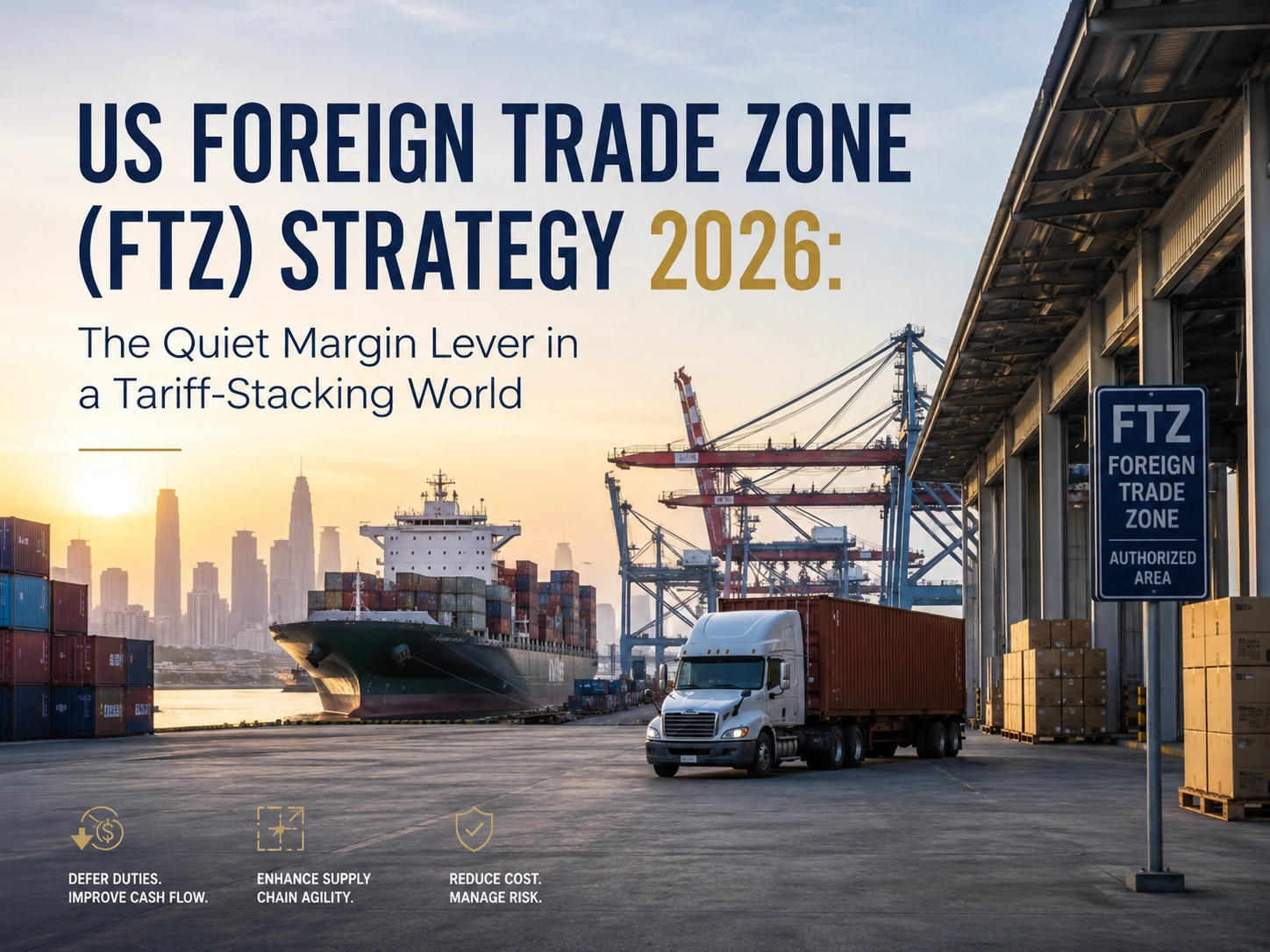
• Tariff Strategy · May 2026 US Foreign Trade Zone (FTZ) Strategy 2026: The Quiet Margin Lever in a Tariff-Stacking World.With effective tariff rates on some Chinese goods exceeding 100% in 2026, FTZs offer duty deferral, MPF consolidation, and cash-flow optimization. Here's the importer playbook. EST 2026-05-11 · READ 8 min · FTZ · MPF · DUTY DEFERRAL |
|
— TL;DR / The Quick Read Tariff stacking pushed effective rates on some Chinese goods past 100% (EV components above 145%). FTZs no longer optional above the $20M annual import threshold. Inverted-tariff treatment is limited for Section 301 goods, but duty deferral + MPF consolidation + re-export exemption still compound monthly. Setup pays back within the first year. |
|
>100% Effective rate on some Chinese goods |
145% Some EV components from China |
$20-30M FTZ break-even annual import |
1934 FTZ program established |
— 01 / WHY NOW
Why FTZs Suddenly Matter Again.
US Foreign Trade Zones have existed since 1934, but they've become genuinely strategic in 2026. Why? Tariff stacking. When Section 301, Section 232, and country-specific reciprocal tariffs combine, effective tariff rates on certain Chinese goods now exceed 100%, with some EV components from China carrying cumulative effective rates above 145% as of early 2026.
For US importers paying these rates, every dollar of duty deferred is a dollar of working capital saved. FTZs are the cleanest legal mechanism to do that at scale.
|
— 02 / THREE CORE BENEFITS The Three Core FTZ Benefits.
|
— 03 / THE INVERTED-TARIFF TRAP
The Inverted-Tariff Trap You Need to Know.
The inverted tariff benefit is often the most powerful FTZ feature. An importer with manufacturing authority in an FTZ can:
| 01Admit components duty-free into the zone |
| 02Manufacture the finished good |
| 03Pay duty only on the lower finished-goods rate at the time of entry |
| Critical caveat for 2026: Inverted tariffs are NOT available for "privileged foreign status" goods, including those imported under the Trump Administration's 2025 tariffs. Section 301 goods generally fall into this category. For most Chinese-origin imports, FTZ inverted tariff doesn't help. Where FTZ still helps: duty deferral + MPF consolidation + re-export exemption (still significant). |
• Quick Answer Q1: Can I use FTZ to avoid Section 301 tariffs entirely? No. Section 301 goods carry "privileged foreign status" and don't qualify for inverted tariff. But you still get duty deferral, MPF consolidation, and re-export exemption. |
|
— 04 / REAL ROI MATH The Real 2026 FTZ ROI Math.For a mid-size importer with $50M annual import value and 25% blended effective tariff:
The break-even threshold for most importers sits around $20-30M annual import value.
|
— 05 / FTZ TYPES
General-Purpose vs Subzone vs Magnet.
| Type | Best for | Setup time |
|---|---|---|
| General-purpose FTZ | Multiple importers sharing zone | 3–6 months |
| Subzone | Single-importer dedicated facility | 6–12 months |
| Magnet sites | New designation flexibility under Alternative Site Framework | 3–6 months |
For most mid-size importers, leasing space in a General-Purpose FTZ operated by 3PLs (including bonded warehouse providers like Mingsung) is the fastest entry path.
• Quick Answer Q2 / Q5: How long does FTZ setup take? How is FTZ different from a bonded warehouse? 3–6 months for leasing in an existing FTZ; 6–12 months for new subzone designation. Bonded warehouses defer duty but have stricter time limits and fewer manufacturing privileges. FTZs offer broader operational flexibility but require more setup. |
• Quick Answer Q4: Can I use FTZ for e-commerce fulfillment? Yes. FTZ + post-de-minimis e-commerce architecture is increasingly popular: import to FTZ, defer duty, ship-and-clear on demand. |
|
— 06 / 90-DAY SETUP PATH Mingsung's 90-Day FTZ Setup Path.A frequent misconception: "Section 232/301 tariffs make FTZs useless." Not true. While inverted tariff treatment is limited for "privileged foreign status" goods, duty deferral, MPF savings, and re-export exemption still apply.
|
|
— READY TO SHIP? Let's find your supply chain
|