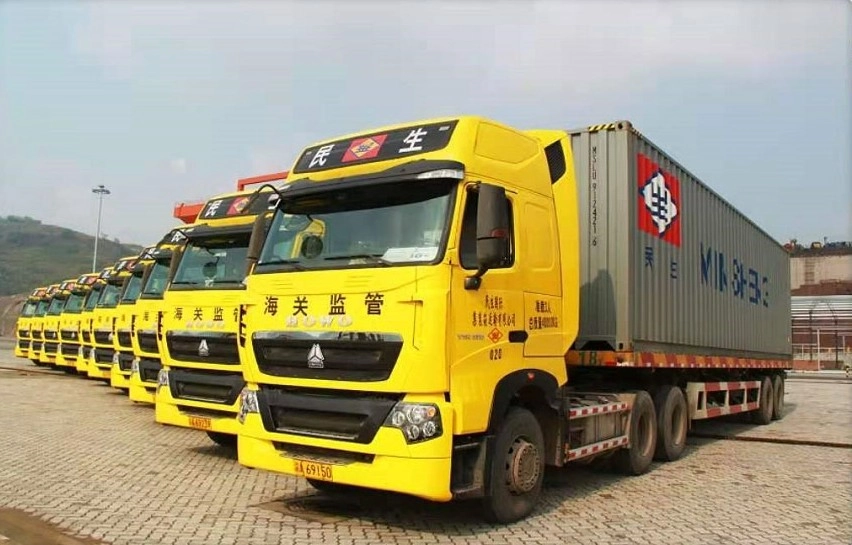
The FTL vs. LTL decision involves shipment frequency, cargo value, transit sensitivity, and route characteristics. Getting it right can save 20-35% on annual ground freight costs.
The Core Cost Mechanics
FTL pricing is based on the total truck rental — you pay for the truck regardless of space used. LTL pricing is based on weight, volume, and freight class — you pay only for your cargo's footprint. The break-even depends on your route: for high-demand Taiwan North-South routes, LTL can be competitive down to 500 kg. On less-traveled routes, FTL may be surprisingly economical at 2-3 tonnes.
When FTL Is the Right Choice Regardless of Volume
- High-value electronics: Co-loading in LTL means your cargo shares handling with other goods. For semiconductor equipment or precision instruments, the damage risk from LTL loading operations often justifies FTL at lower volumes.
- Just-in-time manufacturing: LTL consolidation adds 4-24 hours of CFS dwell time. For JIT production lines requiring hourly delivery precision, FTL's direct model is the only viable option.
- Dangerous goods: Most DG cargo cannot be co-loaded with non-DG cargo. FTL is typically the only compliant option for Class 3, 4, 5, 6, and 8 DG cargo by road.
Mingsung's Dynamic Mode Optimization
For clients with variable shipment sizes, Mingsung offers dynamic mode optimization — analyzing each shipment against current FTL and LTL market rates on the specific route, automatically recommending the most cost-effective mode. For enterprise clients with predictable weekly volumes, our "pool distribution" model aggregates weekly LTL volumes into bi-weekly FTL departures to capture full-truck rate advantages while maintaining acceptable lead times.
For Taiwan manufacturers supplying Chinese distributors, sea-road intermodal trucking — connecting Taiwan factories directly to China warehouses under a single booking — has become the dominant cross-strait logistics model for mid-volume shippers.
How Sea-Road Intermodal Works
Mingsung's cross-strait trucking operates as a seamless three-leg journey. Leg 1 (Taiwan Road): Our truck collects cargo from your Taiwan factory and delivers to the designated port (Keelung for northern cargo, Taipei Port for central, Kaohsiung for southern). Leg 2 (Sea): Cargo loads onto our CT1 or CT2 direct vessel to Shanghai or Ningbo — arriving in 24-36 hours. Leg 3 (China Road): Our China ground network delivers to your specified destination — Yangtze Delta within 1 day, inland cities within 2-4 days.
Why Single-Operator Matters
When cross-strait logistics is fragmented across multiple operators — Taiwan trucker, shipping line, Chinese trucker — accountability gaps emerge at every handoff. With Mingsung managing all three legs under one booking number, there is one point of accountability, one invoice, and one tracking system from Taiwan factory to China warehouse door.
Transit Time and Cost Benchmarks
- Taiwan to Shanghai Yangtze Delta: 3-4 days total. Cost: approximately 25-35% of air freight.
- Taiwan to Shenzhen/Guangzhou: 4-5 days. Cost: approximately 20-30% of air freight.
- Taiwan to Chongqing (river-sea): 6-8 days. Cost: approximately 15-20% of air freight — the most dramatic saving for Yangtze Belt clients.
Cold chain logistics in Asia presents extreme ambient temperatures, variable infrastructure, and increasingly strict regulatory documentation requirements. Mingsung's cold chain trucking service is built to meet these demands end to end.
Temperature Zones and Vehicle Types
- Chilled (2-8C): Fresh produce, chilled seafood, dairy, and pharmaceutical products including vaccines and injectable biologics.
- Frozen (-18C to -25C): Frozen food, frozen seafood, ice cream, and frozen biologics. Vehicles pre-cooled to target temperature before loading.
- Ambient Controlled (15-25C): Electronics and specialty chemicals sensitive to heat but not requiring refrigeration.
IoT Monitoring: The New Regulatory Standard
Taiwan FDA and international pharmaceutical regulators now require continuous, tamper-evident temperature records for regulated cold chain shipments. Mingsung's cold chain vehicles log temperature at 5-minute intervals throughout every trip, stored in our cloud platform and exportable as PDF compliance certificates within minutes of delivery — eliminating paperwork delays that previously took days.
✅ Pharma Client Case Study
A Taiwanese biotech company shipping clinical trial materials needed continuous 2-8C documentation with FDA-compliant audit trails. Mingsung's IoT cold chain delivered zero temperature excursions across 47 deliveries, with automated compliance certificates issued within 10 minutes of each delivery — reducing documentation burden by an estimated 8 hours per shipment.