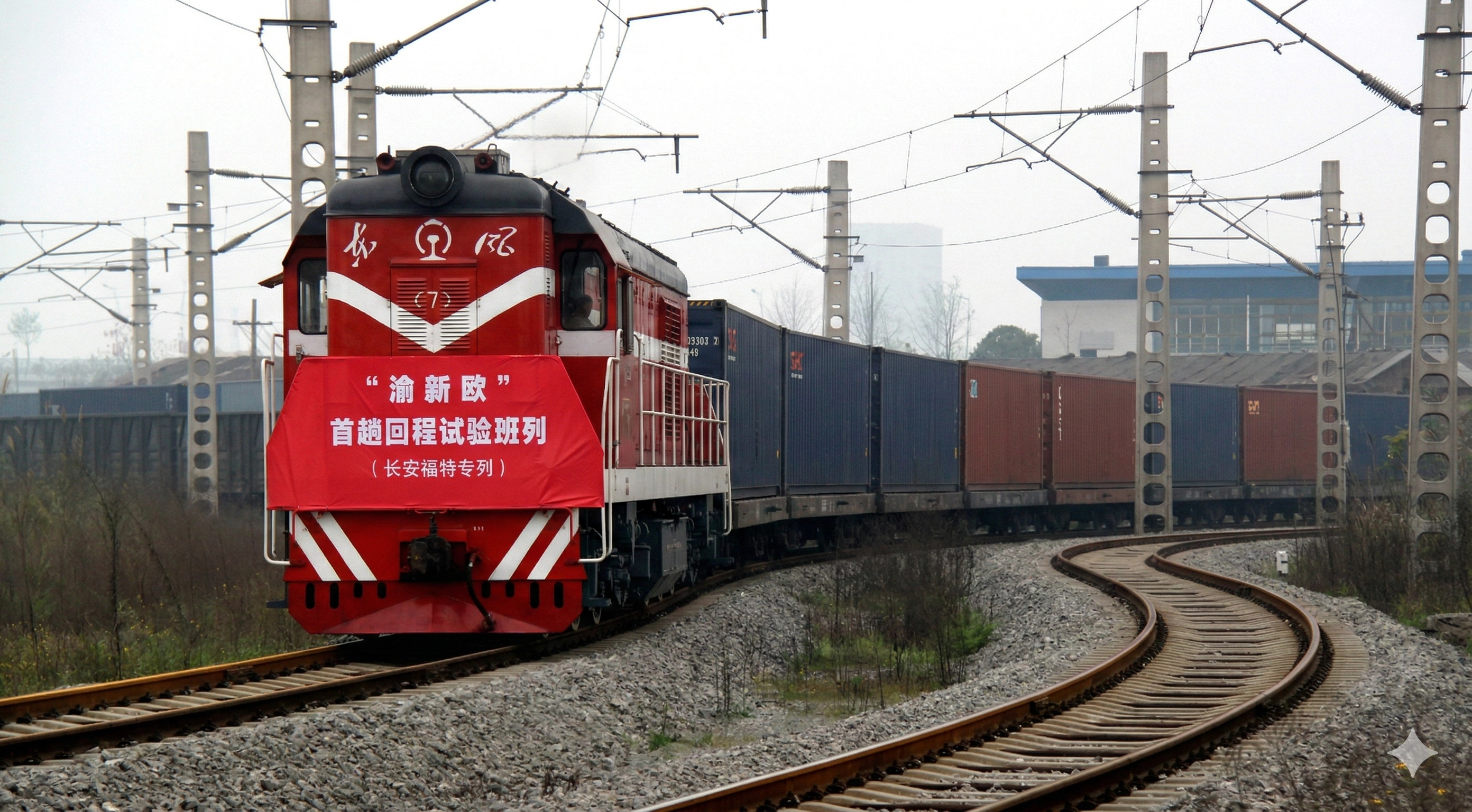
Chongqing handles more China-Europe rail departures per week than Xi'an, Zhengzhou, or Wuhan. For Mingsung — founded in Chongqing in 1925 — this represents a unique convergence of heritage and strategic positioning.
Why Chongqing Leads China-Europe Rail
- Geographic centrality: Chongqing sits at the intersection of the Yangtze River corridor (east-west) and the north-south railway backbone to Central Asia. No other Chinese city offers this precise multimodal intersection.
- Policy support: Chongqing's designation as a core node on the New International Land-Sea Trade Corridor (ILSTC) brings central government investment in rail infrastructure and single-window customs that speeds border processing by 30-40% versus other departure cities.
- Manufacturing proximity: The Yangtze Economic Belt — home to China's most dynamic electronics, automotive, and consumer goods clusters — lies directly upstream. Factory goods move by river barge to Chongqing, then by rail to Europe — a multimodal efficiency unmatched elsewhere.
Mingsung's Chongqing Advantage
Our roots in Chongqing since 1925 mean priority container allocation agreements at the Chongqing International Logistics Hub that guarantee weekly departures for our clients — even during China Golden Week holidays and peak export seasons when spot container availability drops to near zero. This is a material supply chain advantage that newer entrants simply cannot replicate.
Ocean freight to Europe costs 30-50% less than rail but takes 30-35 days versus 15-18 days by rail. The question is not which is cheaper — it is what the 15-day difference costs your business.
The Hidden Cost of Ocean Freight's Time Premium
- Inventory carrying cost: At typical cost-of-capital rates (8-12% annually), 15 additional days of ocean transit costs 0.33-0.50% of cargo value in carrying charges. For a USD 500,000 container of electronics, that is USD 1,650-2,500 per shipment — invisible on the freight invoice but very visible on the balance sheet.
- Safety stock working capital: Longer transit times require larger safety stock buffers. If your European DC carries 30 days of safety stock instead of 15 because of ocean transit uncertainty, the working capital tied up is a real cost of choosing ocean over rail.
- Market timing value: For fashion, electronics, and seasonal goods, being in market 15 days earlier can translate directly to higher sell-through rates and lower markdown risk.
The Rail Decision Threshold
Based on our analysis across hundreds of Taiwan and China exporters, rail typically becomes preferred when: (1) cargo value exceeds USD 200,000 per container; (2) the European buyer demands delivery in less than 25 days; (3) the product is seasonal with a defined selling window; or (4) your supply chain finance model penalizes long transit times. For commodity goods or buyers with flexible delivery windows, ocean freight remains the economic choice.
Taiwan's technology manufacturers increasingly supply European OEM customers who demand 25-day-or-less delivery. Pure ocean freight at 35+ days doesn't qualify. Pure air freight at USD 30,000-50,000 per container is unsustainable for anything but emergencies. Mingsung's sea-rail intermodal fills this gap.
The Taiwan-to-Europe Sea-Rail Solution
- Leg 1 — Taiwan to Chongqing: CT1/CT2 direct service to Shanghai (1-2 days), then river-sea intermodal up the Yangtze to Chongqing (3-4 days). Total: 4-6 days.
- Leg 2 — Chongqing to European Rail Gateway: Weekly CR Express departure to Duisburg (Germany) in 13-15 days, or Warsaw (Poland) in 12-14 days.
- Leg 3 — European Road Delivery: Next-day or 2-day road delivery from Duisburg or Warsaw to any EU destination.
Total Transit and Cost
Taiwan-to-Germany transit: 20-25 days — within European OEM buyer requirements. Cost per 40ft container: approximately 45-55% of equivalent air freight.
✅ Client Result
A Taiwan networking equipment manufacturer shifted 12 monthly 40ft containers from air freight to Mingsung's Taiwan-Europe sea-rail service. Annual freight cost reduction: USD 2.1 million. Average transit maintained at 22 days, managed by adjusting safety stock levels funded by less than 10% of the freight savings.