Introduction: In 2026, Logistics Has Become the Core Moat for Brand Competition
As we stand here in April 2026, the global supply chain has fully pivoted from "post-pandemic recovery" to "deep-tier intelligence." Asia, the epicenter of global e-commerce and manufacturing, is undergoing a structural transformation in its logistics industry that goes beyond mere efficiency gains; it’s a complete reconstruction of business logic. Over the past decade, companies competed on traffic and product quality; however, in 2026, the survival of a brand hinges on its ability to establish a "resilient, transparent, and ultra-fast" logistics system.
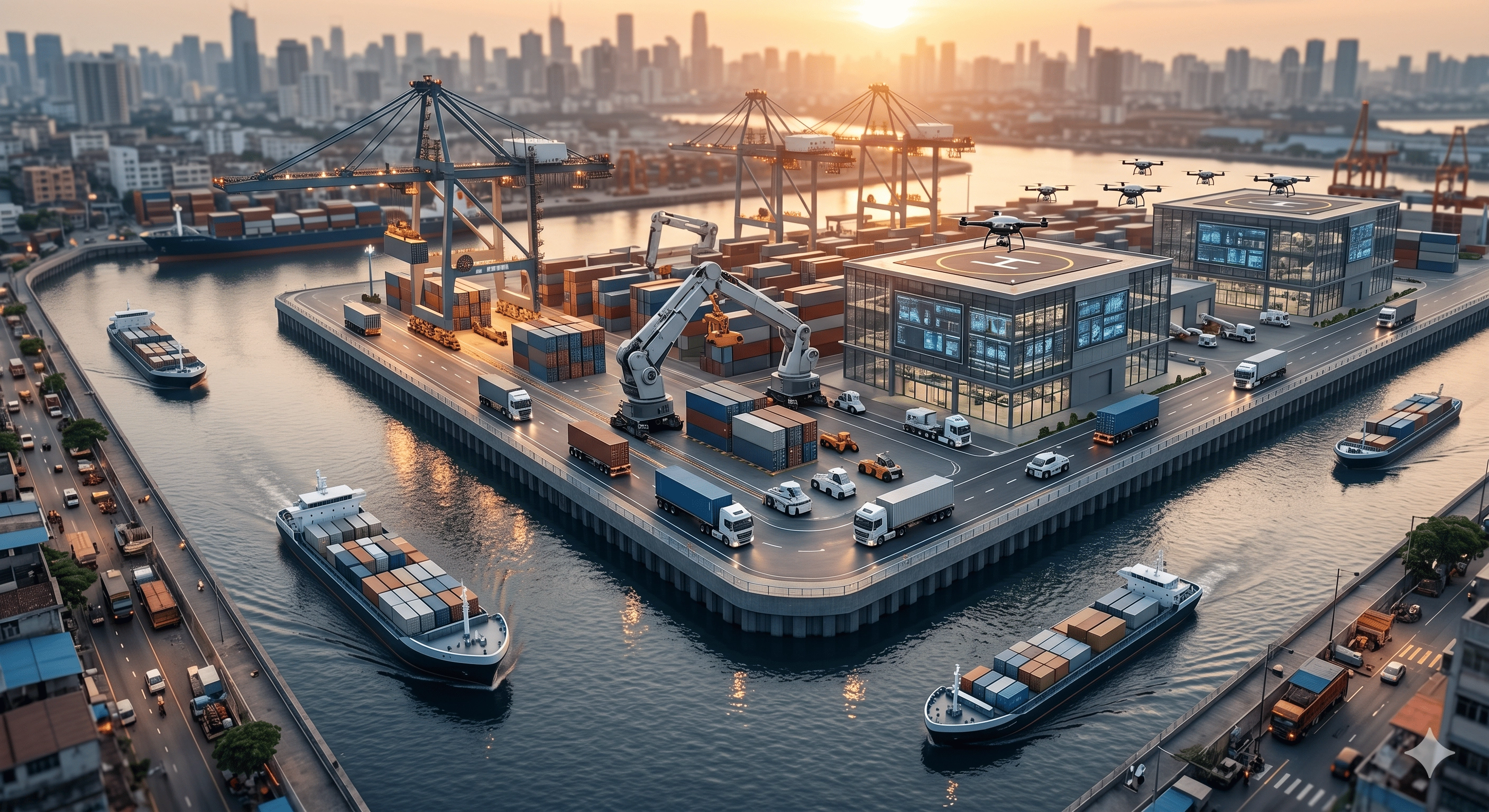
This article deconstructs the five logistics trends reshaping the Asian trade landscape from the perspective of a senior supply chain strategist, providing actionable business model analysis for cross-border enterprises.
Trend 1: AI-Driven "Elastic Logistics" — Moving from Reactive Shipping to Predictive Routing
In 2026, AI is no longer just a supporting tool for the logistics industry; it is the "brain" of the entire operational system. With the mature application of Generative AI and Large Language Models (LLMs) in logistics-specific verticals, leading Asian Logistics Service Providers (LSPs) have fully implemented "Predictive Logistics Routing."
1. Algorithm-Driven Dynamic Route Optimization
Traditional logistics relied on fixed routes and schedules. However, in 2026—where extreme weather and geopolitical conflicts have become the "new normal"—this is no longer sufficient. AI systems, by syncing global weather data, port congestion levels, energy prices, and consumer trends from social media, can re-plan transport paths in real-time. For instance, if the system predicts port delays in Southeast Asia due to monsoon activity, the AI automatically triggers a "Sea-Air" multimodal mode, diverting urgent cargo to nearby inland aviation hubs to ensure uninterrupted delivery.
2. Automated Demand Forecasting and Inventory Pre-positioning
AI in 2026 can precisely predict SKU demand for individual cities with an accuracy rate exceeding 95%. This enables enterprises to practice "Anticipatory Logistics," where goods are pre-deployed to Regional Distribution Centers (RDCs) based on big data analysis even before a consumer places an order.
| Item | 2024 Traditional Model | 2026 AI Elastic Model | Efficiency Gain |
|---|---|---|---|
| Route Planning Time | Manual + Fixed Schedules (Hours) | AI Millisecond Dynamic Adjustment | 99% |
| Avg. Inventory Turnover | 45-60 Days | 15-20 Days | 66% |
| Route Energy Consumption | Fixed routes, ~20% empty rate | AI-optimized full loads, <5% empty rate | 75% |
Trend 2: Deepening the "China Plus One" Strategy and Supply Chain Reorganization
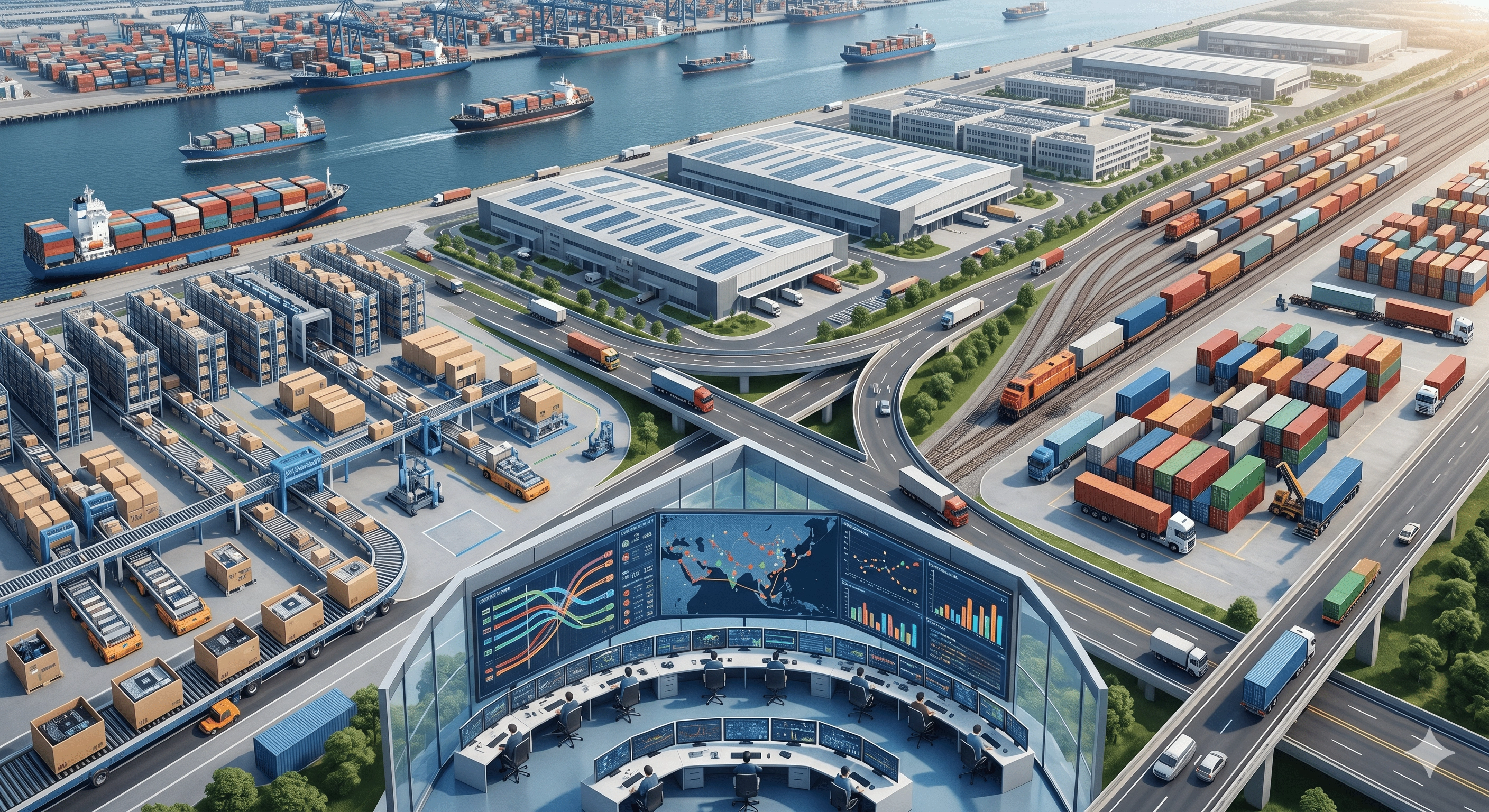
By 2026, the trend of supply chain regionalization has reached its conclusion. The "China Plus One" strategy is no longer just about risk mitigation; it's about achieving the optimal balance between cost, tariffs, and delivery lead times.
1. The Rise of Southeast Asian Manufacturing Hubs
With breakthrough infrastructure growth in Vietnam, Thailand, Indonesia, and India post-2025, these regions have become global centers for electronics and textile exports. The 2026 logistics network has achieved "Indochina Cross-border Truck-Rail Multimodal Transport," reducing land transport time from Ho Chi Minh City to Guangzhou to under 3 days.
2. Taiwan’s Strategic Position in Regional Logistics
In the 2026 Asian landscape, Taiwan—leveraging its high-tech manufacturing and superior transshipment capabilities—has transformed into a regional hub for "High-Value Components." Through the Free Trade Zones in Taoyuan and Kaohsiung, brands have achieved "zero-latency" parts transshipment across the Asia-Pacific.
3. Logistics Complexity in Diversified Sourcing
Multi-point manufacturing means a multiplication of logistics nodes. Brands must establish highly integrated Order Management Systems (OMS) capable of handling complex customs clearance processes across different origins and trade agreements (e.g., RCEP, CPTPP). Smart customs systems in 2026 can automatically determine the optimal tariff path, significantly reducing cross-border operational costs.
Trend 3: Micro-Fulfillment Centers (MFC) and the Last-Mile Blitz
In 2026, consumer expectations have been conditioned by "delivery within the hour." Large suburban warehouses can no longer support this demand, leading to the proliferation of "Micro-Fulfillment Centers" across Asia’s megacities.
1. The Ubiquity of Urban Dark Stores
In densely populated cities like Taipei, Bangkok, and Singapore, underutilized basements and old retail storefronts have been converted into highly automated MFCs. These sites stock the top 2,000 best-selling items for that specific district. Combined with AGV technology, the time from order pick-up to dispatch takes only 3 minutes.
2. Shared Delivery and Automated Fulfillment
The last mile in 2026 is a state of "human-machine collaboration." In legally permitted areas, autonomous delivery vehicles and drones handle roughly 30% of lightweight parcels. In traditional urban areas, logistics platforms use APIs to connect with shared delivery capacity (e.g., part-time couriers and gig economy participants) to achieve extreme dispatch elasticity.
| Delivery Type | 2024 Avg. Lead Time | 2026 Target Lead Time | Core Technology Support |
|---|---|---|---|
| International Express | 3 - 7 Days | Under 48 Hours | Global Smart Air Network |
| Urban/Metropolitan | 24 Hours | 1 - 2 Hours | MFC + Automated Picking |
| Urgent Delivery | 6 Hours | Under 30 Mins | Drones + Neighborhood Nodes |
Trend 4: ESG-Driven Green Logistics — From Compliance to Brand Value Enhancement
ESG (Environmental, Social, and Governance) has become a "must-have" in the logistics industry by 2026. With the full implementation of carbon fees and international carbon tariffs (such as the expanded CBAM), green logistics has shifted from a pure environmental effort to a core commercial competency.
1. Full Life-Cycle Carbon Footprint Tracking
E-commerce platforms in 2026 have fully integrated "Logistics Carbon Calculators." At checkout, consumers can clearly see the carbon emissions generated by different shipping methods (e.g., Standard vs. Green Electric Vehicle Delivery). This isn't just for compliance; it's to win the value-alignment of Gen Z and Gen Alpha consumers.
2. Circular Packaging and Waste Management Business Models
Leading brands in 2026 have completely phased out single-use plastic packaging, replacing them with recyclable circular boxes equipped with IoT tags. After receiving a package, consumers can return it via reverse logistics systems at convenience stores or community collection points in exchange for reward points. This closed-loop system reduces packaging costs while significantly boosting repeat purchase rates.
3. Fleet Electrification and Hydrogen Adoption
In major Asian cities, restricted zones for internal combustion trucks have expanded. By 2026, the electrification rate of "last-mile" fleets for logistics giants has exceeded 80%. For long-haul cross-border transport, hydrogen-powered heavy trucks have also begun large-scale commercial pilot operations.
Trend 5: Omni-channel Logistics Reconstruction Triggered by Social Commerce
By 2026, consumer behavior has become completely fragmented. TikTok Shop, Instagram Reels, and various emerging social platforms have become the primary starting points for shopping. This presents a massive challenge to traditional logistics.
1. Conflict Between Fragmented Orders and Scaled Fulfillment
Orders from social commerce are characterized by being "explosive, small-batch, and high-return." Logistics providers in 2026 must possess extreme warehouse-delivery integration capabilities to handle scenarios where daily order volume surges from 1,000 to 100,000 units.
2. Digitalization and Automation of Cross-border Customs
To match the "scroll and buy" instant experience of social commerce, customs authorities across Asia have widely adopted "AI-driven declaration auditing" in 2026. Using blockchain technology to ensure trade data integrity, low-value cross-border parcels can now achieve "release upon arrival" in seconds, eliminating the final barrier to cross-border shopping.
3. Monetization Opportunities in Reverse Logistics
High return rates are a major pain point for social commerce. Smart logistics providers in 2026 offer "Return-to-Resale" value-added services. When an item is returned to a nearby center, the system automatically inspects and repacks it, listing it directly as "secondary sale" inventory for that region, thus avoiding the expensive cost of shipping it back to the original country.
Business Insights: How Can Companies Win the 2026 Logistics Wave?
In 2026, logistics is no longer a back-end expense; it is a part of the marketing strategy. Companies should adopt the following three strategic paths:
- Implementation of Digital Twin Technology: Build a "Digital Twin" of your logistics system to simulate supply chain stress under different scenarios in a virtual environment, allowing for the creation of optimal contingency plans.
- Balancing Data Sovereignty and Sharing: Share sales data with logistics providers in exchange for prioritized capacity and lower fulfillment costs. This requires a foundation of robust information security.
- Human-Centric Automation: While pursuing efficiency, successful companies in 2026 prioritize "human-machine collaboration" in the workplace. Using exoskeletons and smart wearables reduces the physical burden on warehouse staff and improves workforce stability.
Mastering 2026: Defining the New Standard in Logistics
The 2026 Asian logistics market is a complex ecosystem woven from technology, data, and environmental consciousness. For brands, it is the best of times—you have unprecedented tools to reach global consumers. It is also the most challenging of times—consumer patience and regulatory requirements have reached an all-time high. Only by deepening digital transformation and embracing AI and ESG can you navigate the turbulent waves of logistics change and sail steadily toward the shores of profitability.
Looking for more logistics details?
You are welcome to consult Mingsheng International Logistics Co., Ltd.
We are happy to evaluate and provide the most suitable solutions for your business. Feel free to contact our Sales Department directly for inquiries at any time!
Sales Department Contact: Ms. Cheng Tel: +886-2-2507-6368 Ext. 251
Email: [email protected]