BANGKOK, THAILAND – Minsheng Group, a leading provider of global logistics solutions, announces a significant milestone in its international growth strategy with the official launch of its Thailand overseas warehouse. This move further solidifies the company’s logistics footprint across the high-growth Southeast Asia (SEA) region.Strategic Positioning in the ASEAN Hub To meet the surging demand for regional trade and cross-border e-commerce, Minsheng has established a localized branch office and a state-of-the-art logistics hub in Bangkok. Since operations commenced in July 2024, the facility has demonstrated rapid scalability and stable growth, supporting a diverse portfolio of international brands and e-commerce platforms.Enhancing the Regional Supply Chain Thailand serves as a critical nexus in the global supply chain, offering world-class infrastructure and advanced manufacturing capabilities. By providing a localized presence, Minsheng Group offers clients a seamless, integrated supply chain experience, including:WMS-Driven Warehouse Management: Real-time inventory tracking and optimization.Regional Distribution: Accelerated "Last-Mile" delivery networks across Thailand and neighboring markets.Cross-Border Logistics: Specialized solutions for international freight and customs clearance.Modern Infrastructure for E-Commerce Excellence The warehouse is equipped with the latest logistics automation and advanced management systems tailored to the high-velocity requirements of international trade. As warehouse utilization continues to trend upward, Minsheng is effectively addressing the regional shortage of high-quality third-party logistics (3PL) providers.A Vision for Global Connectivity "The Thailand overseas warehouse is a cornerstone of our global expansion strategy," a spokesperson for Minsheng Group noted. "This facility functions as a vital regional hub, allowing us to provide the agility and reliability our customers require in the competitive Southeast Asian market."Looking ahead, Minsheng Group will continue to identify strategic locations for further overseas warehouse development. This expansion is part of a long-term commitment to building a comprehensive global logistics network that delivers flexible, end-to-end supply chain solutions to a worldwide clientele.

MINGSUNG INTERNATIONAL LOGISTICS COMPANY Group News Flash
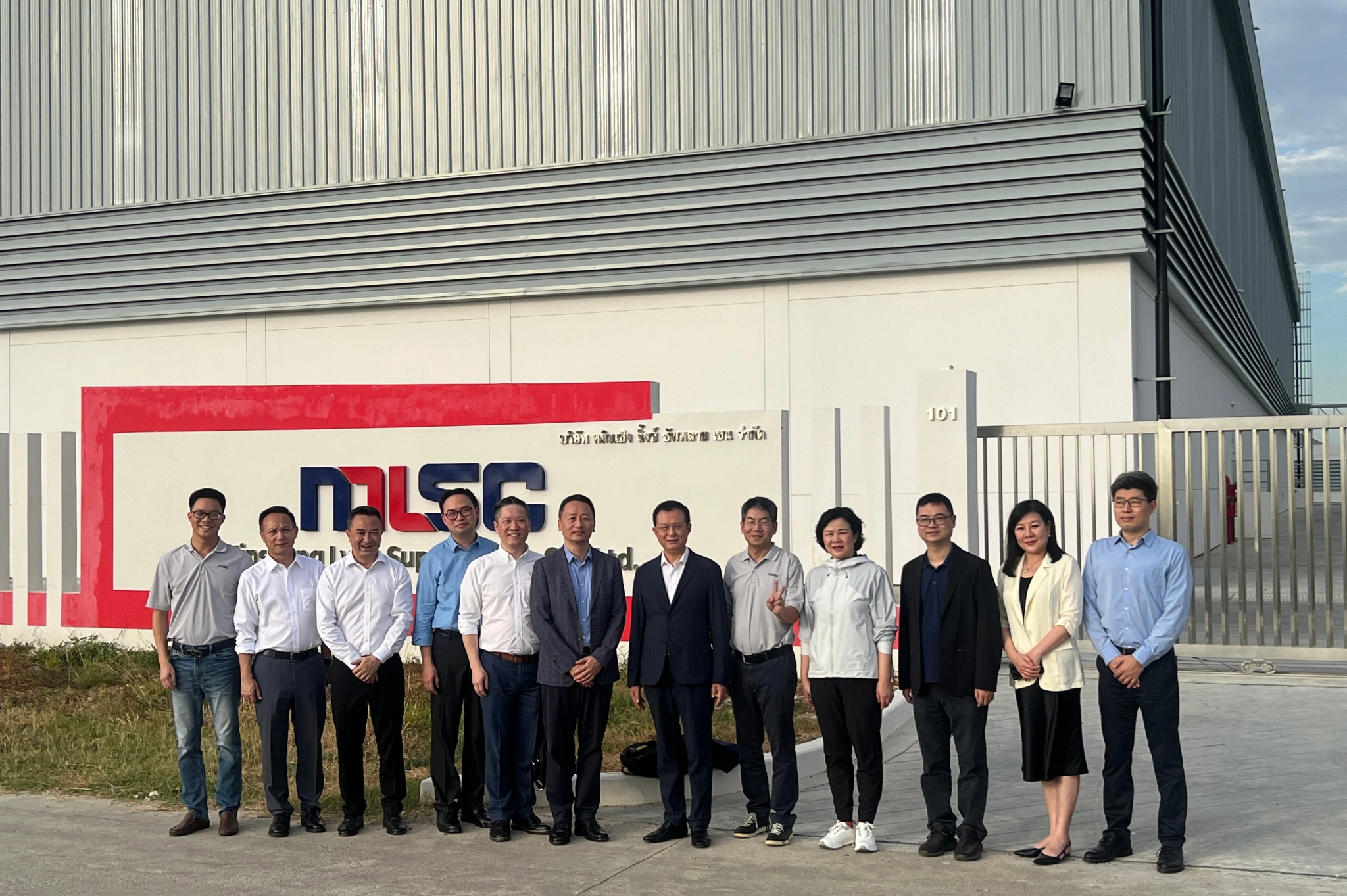
Thailand Warehouse & SE Asia Logistics | Minsheng
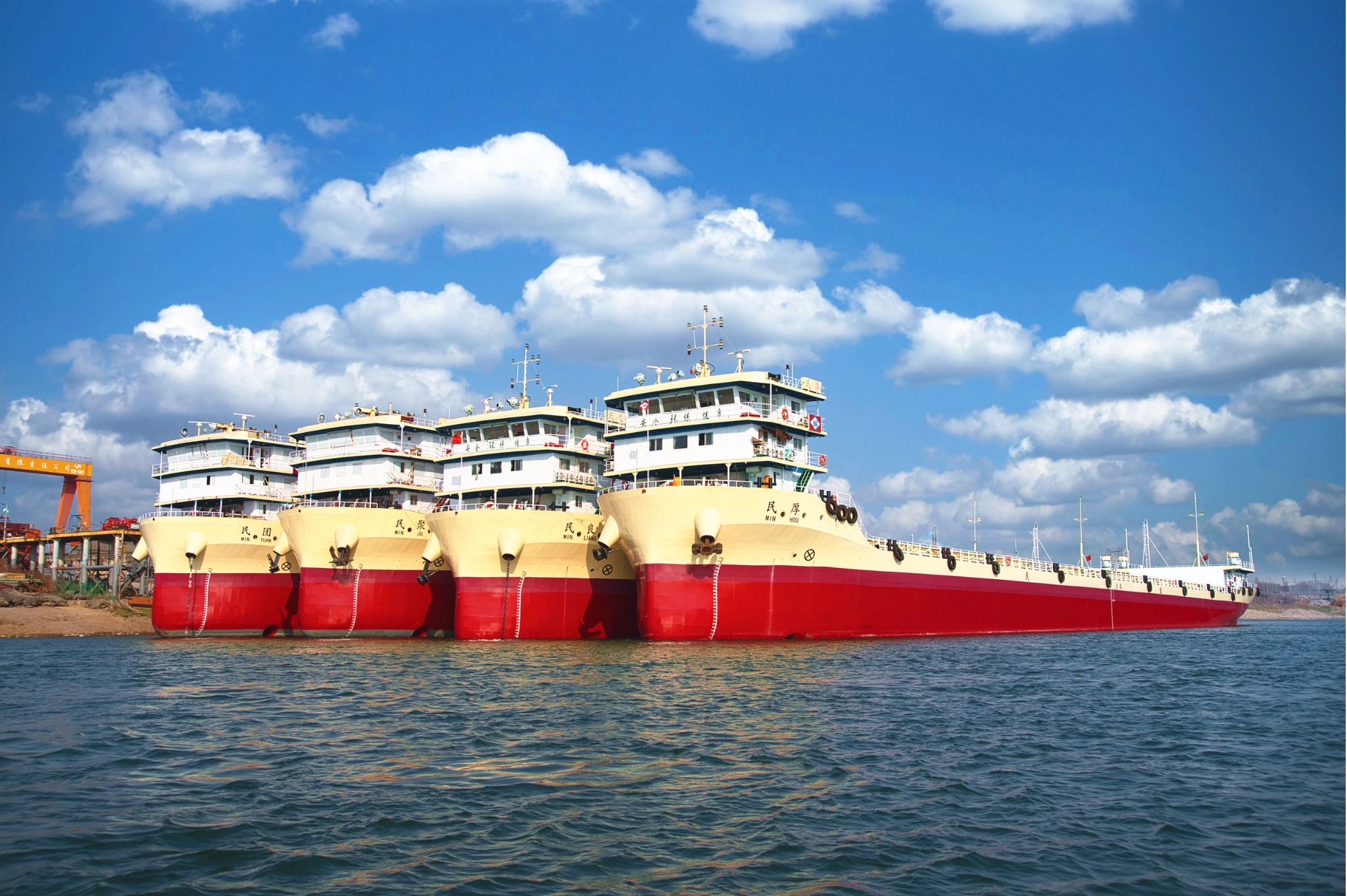
Green Logistics & Sustainable Shipping Fleet | Minsheng
CHONGQING, CHINA – Minsheng Group is accelerating the maritime industry’s transition toward sustainable shipping with the full deployment of its new-energy container fleet. This modernization marks a pivotal milestone in the company’s ESG (Environmental, Social, and Governance) strategy and its commitment to low-carbon logistics solutions.A Milestone in the Yangtze River Green CorridorOn December 5, 2025, the Ming Xun—Minsheng Group’s fourth 130-meter LNG-powered container vessel—departed from Yichang for its maiden voyage to Shanghai. The delivery of the Ming Xun completes a major fleet upgrade, signaling Minsheng’s leadership in standardized, eco-friendly inland shipping operations.Timeline of Innovation: Minsheng’s Green Fleet EvolutionMinsheng Group has consistently pioneered alternative fuel technologies to reduce the environmental impact of regional trade.DateMilestoneImpactJune 2022Minshenghao Maiden VoyageThe first LNG-diesel dual-fuel Ro-Ro ship for commercial vehicles on the Yangtze.March 2023Minhui Entry into ServiceIntroduced LNG technology to mainline container shipping.Jan 2025Minhou Maiden VoyageThe first practical application of methanol-diesel dual-fuel for Yangtze container transport.Dec 2025Ming Xun DeploymentCompletion of the four-vessel series, finalizing the new-energy fleet rollout.Advancing ESG Through Modern EngineeringMinsheng Group’s fleet modernization addresses all three pillars of ESG in logistics:Environmental: By utilizing LNG (Liquefied Natural Gas) and Methanol, these vessels significantly reduce Carbon (CO2), Nitrogen Oxide (NOx), and Sulfur Oxide (SOx) emissions. Optimized hull designs further enhance fuel efficiency per TEU (twenty-foot equivalent unit).Social: Through collaboration with research institutes and shipyards, Minsheng is driving technological innovation. The fleet supports intermodal transportation, seamlessly moving railway wide-body containers from rail to water to improve regional connectivity.Governance: Minsheng has implemented rigorous operational management systems to ensure the highest standards of safety and reliability for its high-tech, new-energy vessels.Building a Sustainable Logistics FutureAs global brands face increasing pressure to de-carbonize their supply chains, Minsheng Group provides a clear solution. By integrating low-carbon shipping with intermodal logistics, Minsheng helps customers reduce their "Scope 3" emissions while ensuring reliable cargo delivery."Our investment in new-energy vessels is more than a fleet upgrade; it is a commitment to the global transition toward sustainable transportation," stated Minsheng Group.
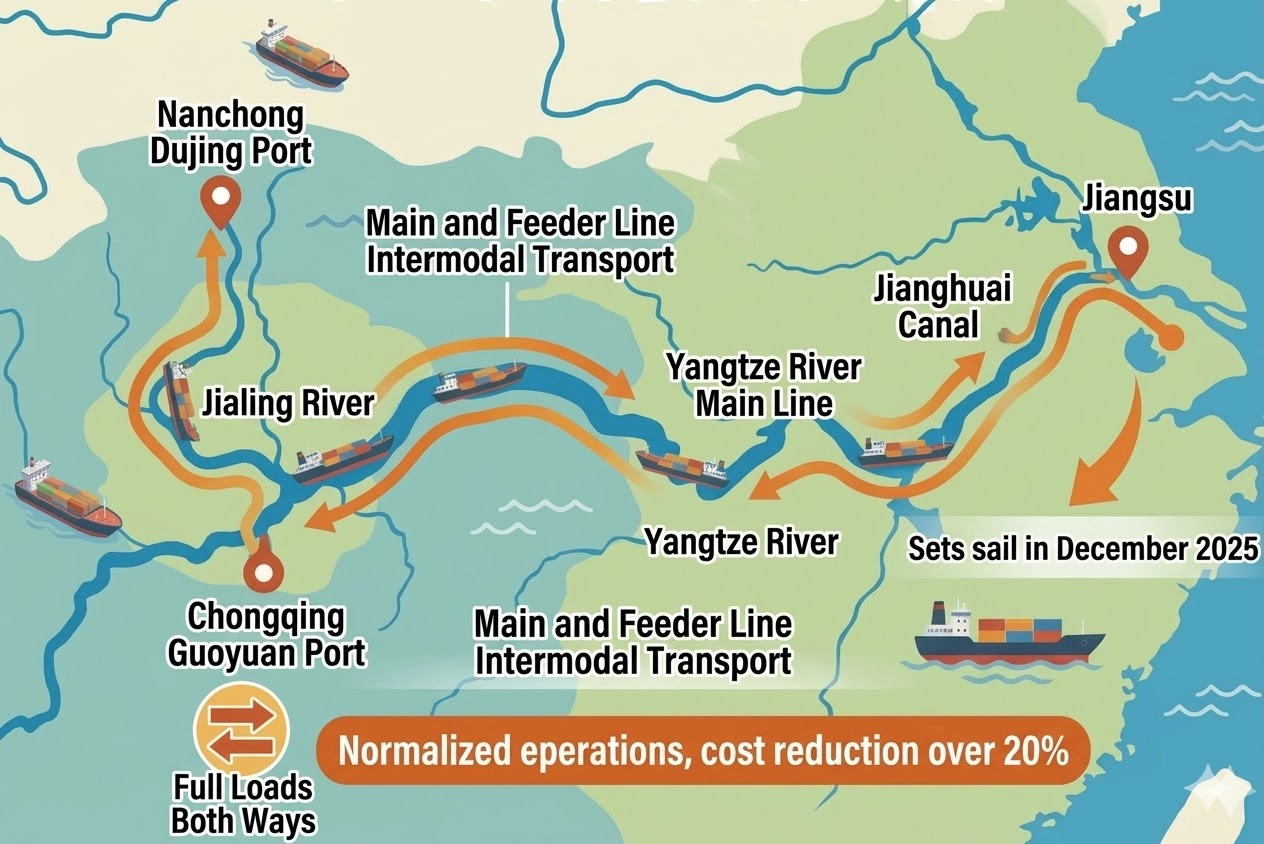
New Guoyuan-Nanchong Route Slashes Container Costs by 20%
On December 15, 2025, the cargo vessels "Chuan Hang 001" and "Chuan Hang 002" set sail from Chongqing’s Guoyuan Port, each laden with 20 TEUs of quartz sand. Their successful arrival at Nanchong’s Dujing Port on the 19th officially marks the transition of Minsheng Shipping’s "Jiangsu–Guoyuan–Nanchong" (Qianli Qingzhou) container route into regular, scheduled operations. This is more than just a route opening; it represents a major breakthrough in the "trunk-to-branch" intermodal transport model for Southwest China.Trunk-to-Branch Intermodal Transport: Unlocking the Jialing River’s "Golden Waterway"Historically, container transport on the Jialing River faced several critical pain points, including navigational channel restrictions, inconsistent lock throughput efficiency, and the logistical challenge of empty container repositioning. Minsheng Group has successfully dismantled these bottlenecks through the following four strategic optimizations:1. Schedule Optimization: Precision timing for lock transits and voyage synchronization.(This ensures that ships aren't idling at the locks—which is the quickest way to kill a profit margin.)2. Intelligent Dispatch: Strategic empty container repositioning to eliminate "deadheading" and resource waste.(In the industry, "deadheading" or "empty running" is our greatest enemy. This strategy ensures every mile traveled is a mile paid for.)3. Port Synergy: Deep integration with Nanchong Port to streamline stevedoring and intermodal handovers.(Efficiency on the water is useless if you're stuck at the pier. This is about making sure the "handshake" between the ship and the shore is seamless.)4. Operational Stability: Ensuring consistent, reliable, and "always-on" route performance.(A shipping route is only as good as its reputation. This is about moving from "trial runs" to a service that shippers can set their watches by.)5. Loaded-Both-Ways: Achieving dual-track optimization of vessel utilization and operating costs.(This is the ultimate goal—full containers going out, full containers coming back. It’s the secret sauce behind that 20% cost reduction you mentioned.)Following nearly four months of trial operations, the "Qianli Qingzhou" route has successfully established a "loaded-both-ways" virtuous cycle:Outbound Leg: Transporting industrial raw materials, such as quartz sand.Inbound Leg: Carrying chemical products back to the Yangtze River corridor, significantly boosting vessel utilization rates.Performance Data: In the first three quarters of 2025, the route reached a cumulative container throughput exceeding 100 TEUs. Preliminary estimates indicate that once the route is fully normalized and stabilized, it will help shippers reduce comprehensive logistics costs by more than 20%.The "Qianli Qingzhou" Container RouteFuture Outlook: Empowering the Regional Economy through Cost-Efficiency OptimizationLooking ahead to 2026, Minsheng Group will continue to scale and refine the "Qianli Qingzhou" model. Beyond increasing sailing frequency and operational stability, the group aims to diversify the cargo base suitable for waterway transit while collaborating with ports along the route to enhance the collection and distribution infrastructure. These initiatives will continue to drive "cost-efficiency optimization" for regional logistics, injecting fresh economic momentum into the Jialing River basin.💡 FAQQ1: What exactly is the "Qianli Qingzhou" Trunk-to-Feeder Intermodal Service?Answer: This refers to a strategically integrated logistics model that connects the Yangtze River (the Trunk line) with the Jialing River (the Feeder line). By utilizing Guoyuan Port as a primary transshipment hub, the service ensures the seamless and efficient transfer of bulk and containerized commodities between major waterways and regional branches.Q2: What is the projected cost-saving for shippers using this route?Answer: Based on recent operational data, the transition to regularized, scheduled service is expected to reduce comprehensive logistics costs for shippers by more than 20%. These savings are achieved through improved scheduling, reduced idle times, and optimized equipment usage.Q3: What types of cargo are typically handled on the return leg?Answer: The return leg (backhaul) currently focuses on transporting chemical products destined for industrial centers along the Yangtze River corridor. This achieves a "loaded-both-ways" (full-in, full-out) cycle, which maximizes vessel utilization and ensures the highest level of cost-efficiency for the entire voyage.